Municipalities and homeowners alike are responsible for the maintenance of their sewer lines. When it comes time to repair or replace a section of pipe, there are generally two methods that contractors will use: CIPP and sliplining. But what’s the difference between the two?
Here’s a quick overview:
Cured-in-place pipe (CIPP) process involves inserting a felt or resin-coated tube into an existing line. A liquid curative is then pumped through the pipe which hardens and bonds the liner to the existing pipe. This method can be used on pipes with diameters ranging from 3 to 60 inches.
Sliplining repairs leaks and restores structural stability to an existing pipeline by inserting a new, smaller diameter pipe into the existing host pipe. Though sliplining can be used in virtually any size pipe, its use is limited in pipes where there are large obstructions.
Both processes have benefits and drawbacks which should be considered before deciding the best option for your project.
CIPP Lining
CIPP or cured-in-place-pipe is a trenchless pipe lining method in which a liner is inserted into an existing pipe. This liner is treated with a resin that hardens and adheres to the existing pipe surface and effectively seals any cracks or leaks creating a durable, long-term solution.
Generally, the CIPP lining process involves the following steps:
- A flexible liner is inserted into the existing pipe.
- The cured-in-place liner is expanded to fit snugly against the pipe walls.
- A curing agent is introduced into the liner through a tube that runs through the center of the liner or by injecting it into the liner through perforations.
- The curing agent hardens the liner, creating a new pipe within the old one.
- Any excess liner is trimmed away, and the new pipe is ready for use.
Advantages of CIPP…
- No excavation: CIPP is a trenchless technology, so no excavation is needed. This means that the surrounding area will not be disrupted while the sewer line is repaired.
- Seals leaks and cracks: The CIPP process seals any leaks or cracks in the old pipe, preventing water from leaking into the surrounding soil and destabilizing the ground around the pipeline.
- Better flow capacity: CIPP repair will often have an improved flow capacity which helps to prevent clogs and backups in the future. This process keeps your pipe’s diameter closer to its original size and, thereby, not adversely affecting the flow capacity of the pipeline.
- Extended service life of the pipeline: The CIPP-restoration process increases the service life of the pipeline which can often last decades. This fact alone often makes CIPP a cost-effective, trenchless alternative.
Both methods have their advantages and disadvantages. Understanding the process differences between CIPP and sliplining, can help you decide which method is right for your pipeline repair.
Sliplining
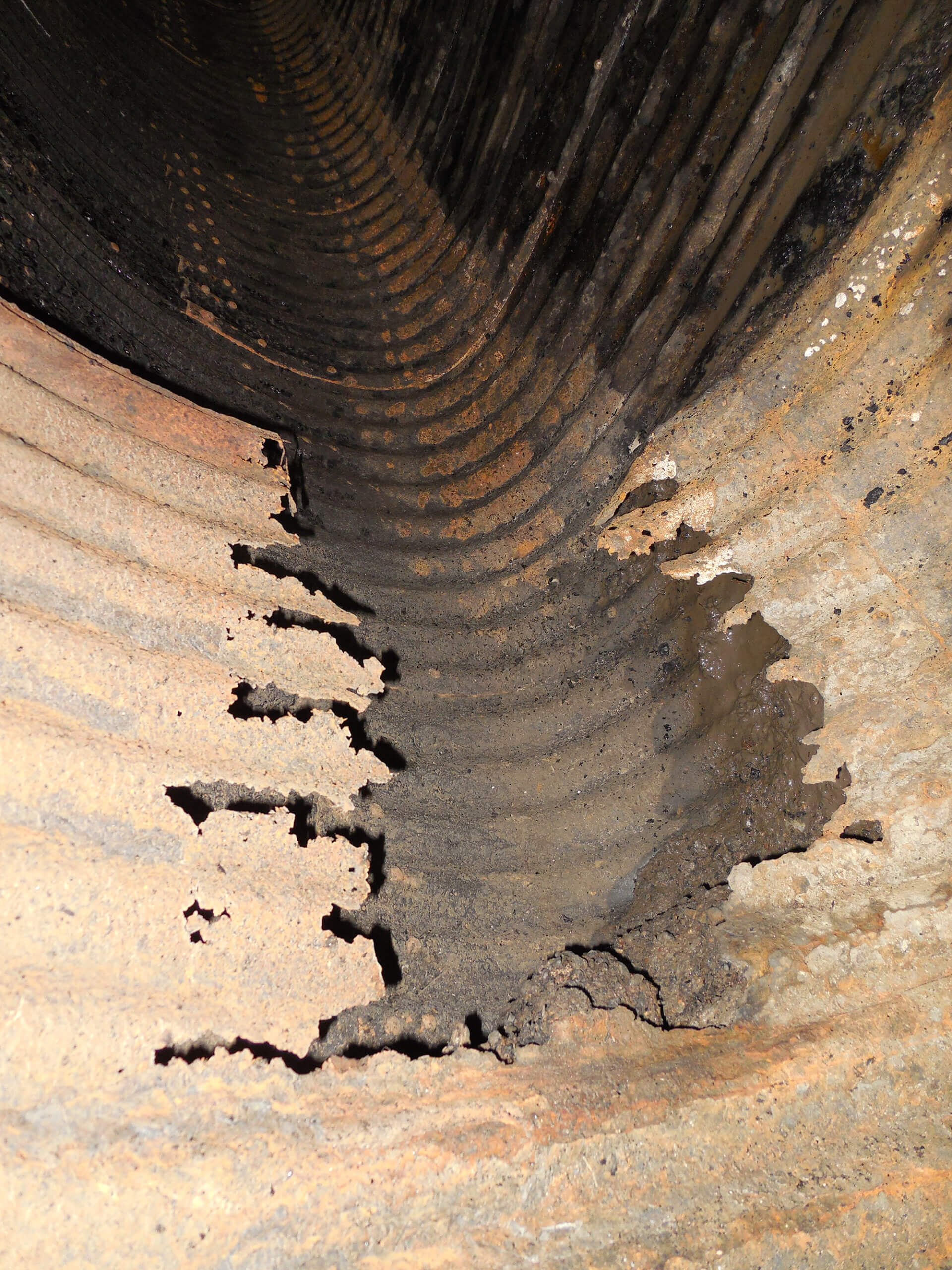
The sliplining process involves “slipping” a new pipe inside an existing pipeline. This new inner pipe, known as the liner, must be slightly smaller in diameter than the original host pipe so that it can slide over any obstructions, tears or defects of the structurally compromised pipe. The sliplining method is typically used when significant damage to the existing pipe needs to be repaired, but the surrounding area is still structurally sound.
Sliplining is often used to repair sewer lines, storm drains, and water pipes because it can rehabilitate pipes that are damaged due to corrosion, cracks, or root infiltration but otherwise structurally sound. Since the process of sliplining requires that a smaller diameter pipe to fit into the original host pipe, the newly repaired pipeline will have a reduced flow capacity.
Sliplining has some advantages…
- Less disruptive: Sliplining is less disruptive than other pipe repair methods because it does not require excavating the entire pipe, only at the entry access.
- Versatile: Sliplining offers a wide range of applications can be used to repair most sewer lines, storm drains, and water pipes. It is commonly used to seal leaks in mostly straight
pipeline application and is good alternative for segmented pipeline repairs. - Efficient and effective: Sliplining can be used to repair difficult-to-reach areas because the process requires minimal access and repair work.
In what other ways do these two rehabilitation methods compare?
Here are more key differences between CIPP and Sliplining:
-
Material
CIPP uses a resin-impregnated felt liner in the repair process while the sliplining process uses high-density polyethylene (HDPE) pipe to line the affected pipeline.
-
Process
CIPP process cures a new lining “in place” that adheres to and restores the existing pipe while sliplining involves the insertion a new HDPE pipe into the existing line.
-
Installation
CIPP process can be installed in wet or dry conditions often without disrupting service to surrounding customers or businesses. Sliplining, on the other hand, requires that the existing sewer line be dry which often requires a temporary bypass to divert flows.
-
Disruption
CIPP does not require excavation trenches whereas sliplining requires some minimal excavation to access the existing pipeline.
-
Cost
CIPP lining is a more flexible process that requires less work and equipment. Sliplining, on the other hand, typically takes more time and requires more specialized equipment, materials and related expenses.
Both methods have their advantages and disadvantages. Understanding the process differences between CIPP and sliplining, can help you decide which method is right for your pipeline repair.
Whichever method you choose, be sure to work with a reputable contractor who has experience with that technique. To learn more about CIPP and sliplining – as well as other sewer repair methods – contact MCSP at 512-482-3300. We are experienced and equipped to handle all your trenchless pipe repair needs.
About MCSP
MCSP provides proven, cost-effective, efficient trenchless solutions for the repair and rehabilitation of structurally deteriorating sewer lines, storm drains, and water pipelines.
Utilizing the latest in trenchless technologies and applications, MCSP can restore and improves the structural integrity and functionality your deteriorated pipelines often extending their service life 50-plus years.